
Lyophilized vs. Liquid IVIg: Stability Profiles and Storage Best Practices for Laboratories
Quantitative Analysis of Protein Degradation and Standardized Aliquoting Protocols
Abstract
Intravenous immunoglobulin (IVIg) serves as a critical biotherapeutic in both research and clinical settings, where its stability directly determines the reliability of experimental outcomes. This technical guide systematically compares the fundamental differences between lyophilized and liquid formulations for research applications, quantitatively analyzes the degradation mechanisms caused by repeated freeze-thaw cycles, and provides standardized aliquoting and storage Standard Operating Procedures (SOP). Experimental data demonstrates that three freeze-thaw cycles can cause over 20% activity loss in IVIg and a three-fold increase in aggregate content; however, implementing single-use aliquoting strategies can limit activity loss to less than 5%, ensuring reproducibility and credibility of experimental data.
IVIg stability at -20°C, reconstituting lyophilized antibodies, protein aggregation prevention, IVIg shelf life, IVIg Product Selection
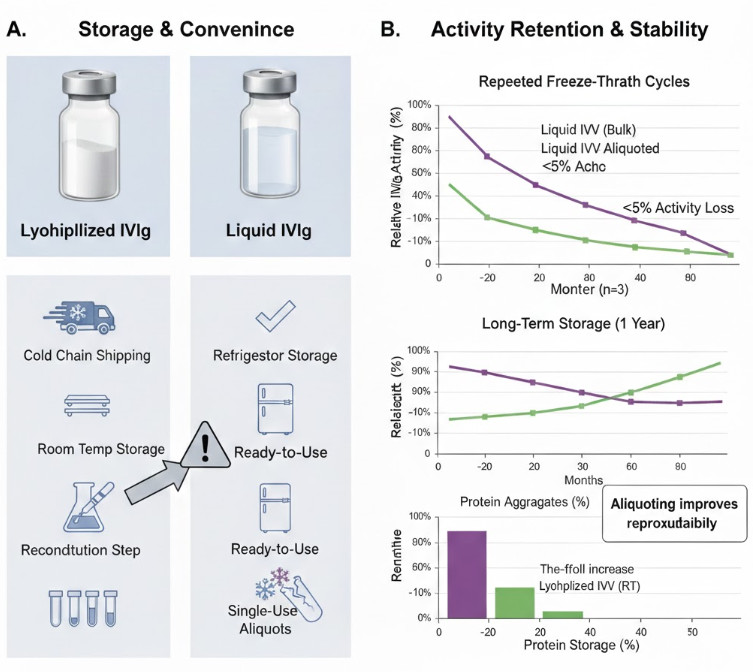
Fig 1. Comprehensive comparison of storage convenience and activity retention between lyophilized and liquid IVIg
1. Morphology Comparison: Lyophilized vs. Liquid IVIg
1.1 Advantages of Lyophilized Powders
- Shipping-Friendly: No cold chain required, stable at ambient temperature during transport, significantly reducing logistics costs and risks
- Long-Term Storage: Shelf life of 3-5 years at 2-8°C, substantially superior to liquid formulations
- Concentration Flexibility: Allows free adjustment of reconstitution concentration based on experimental needs, avoiding batch-to-batch variability
1.2 Advantages of Liquid Formulations
- Ready-to-Use: No reconstitution step required, reducing contamination risks and preparation time
- Activity Assurance: Prevents protein damage from improper reconstitution, ensuring higher batch-to-batch consistency
- High-Throughput Compatible: Directly usable on automated platforms, improving experimental efficiency
Choose lyophilized powder for long-term reserves or laboratories in remote areas; recommend liquid formulations for high-frequency use or automated platforms. For more information on IVIg product characteristics, refer to Professional Supplier Technical Whitepaper.
2. Reconstitution Risks: Agitation is the Invisible Protein Killer
2.1 Denaturation Mechanisms from Mechanical Stress
Reconstitution is the primary step for activity loss in lyophilized powders, where shear forces from vigorous shaking cause:
- Bubble-Induced Denaturation: Air-liquid interface exposure of hydrophobic groups, triggering irreversible aggregation
- Oxidative Damage: Bubbles increase protein-oxygen contact, promoting methionine oxidation
- Subvisible Particles: Formation of 2-10 μm particles that activate complement systems and interfere with cell-based assays
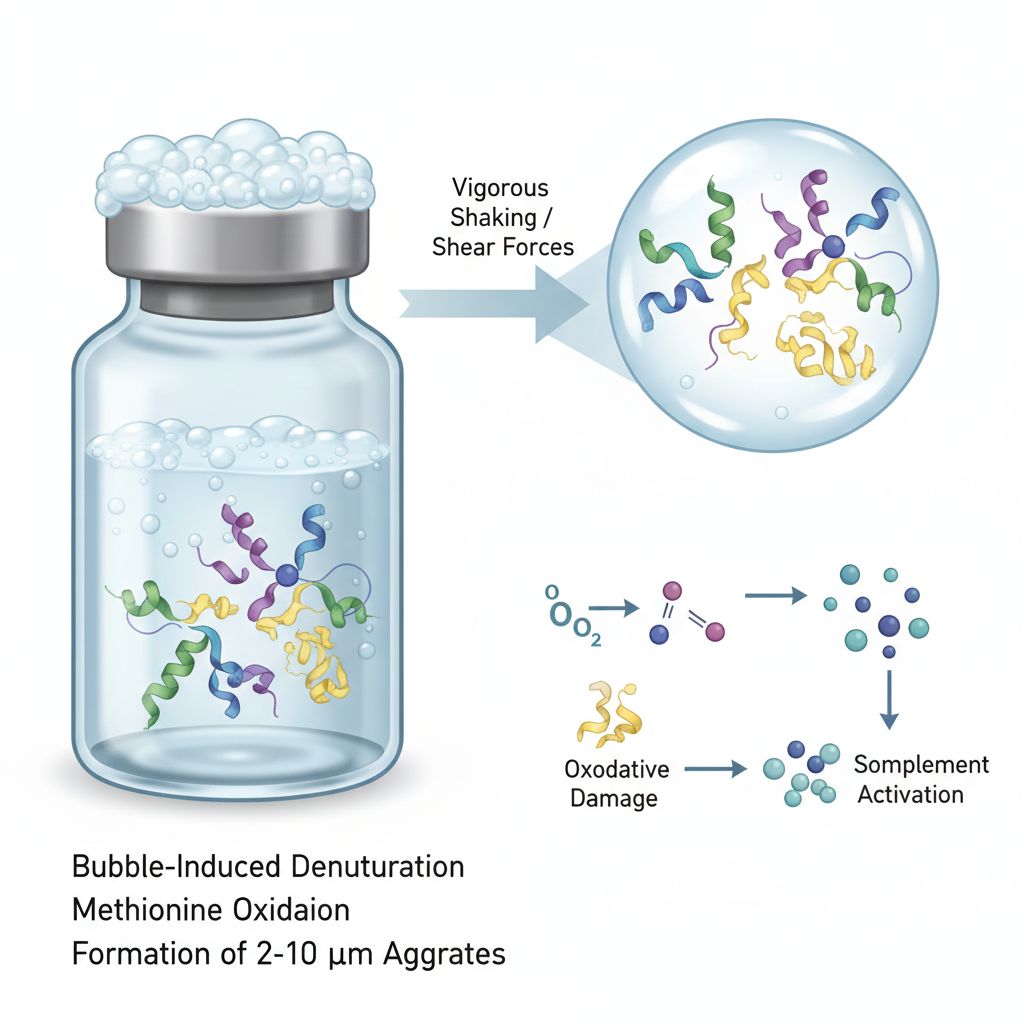
Fig 2. Molecular mechanism schematic of bubble formation and protein aggregation during reconstitution
2.2 Safe Reconstitution SOP
- Use low-speed vortexing (<500 rpm) or gentle inversion mixing
- Slowly add diluent along the vial wall to avoid direct impact on the powder
- Allow to stand at room temperature for 15-30 minutes for natural dissolution
- Strictly prohibit use of ultrasonication or high-speed shakers
3. Freeze-Thaw Cycle Data: Quantitative Analysis of Activity Degradation
3.1 Experimental Activity Retention Data
Experimental data shows that after repeated freeze-thaw cycles, IVIg Fc-binding activity and complement-neutralizing activity decrease exponentially:
| Freeze-Thaw Cycles | Fc-Binding Activity Retention | Complement-Neutralizing Activity Retention | Aggregate Content (SEC-HPLC) |
|---|---|---|---|
| 0 cycles | 100% | 100% | 1.2% |
| 1 cycle | 95.3% | 93.8% | 2.7% |
| 3 cycles | 78.6% | 71.2% | 8.4% |
| 5 cycles | 54.2% | 48.9% | 18.9% |
3.2 Critical Threshold Analysis
- Single freeze-thaw loss <5%: Acceptable for emergency situations
- 3 cycles is the critical threshold: Over 20% activity loss with three-fold aggregate surge
- Basically scrapped after 5 cycles: Nearly half activity lost, severely compromising data credibility
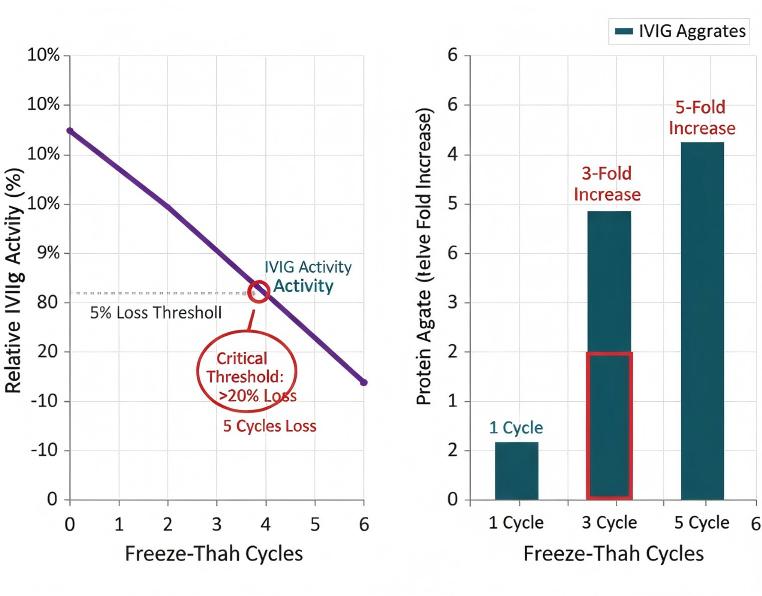
Fig 3. Correlation curves between freeze-thaw cycles and IVIg activity decay plus aggregate formation
The core mechanism of freeze-thaw damage lies in mechanical stress from ice crystal formation and concentration effects accelerating interprotein interactions, ultimately causing irreversible aggregation. Experimental data establishes three freeze-thaw cycles as the acceptable limit for research applications.
4. Core Recommendations: Aliquoting Strategy and Standard Operating Procedures
4.1 Golden Rules for Aliquoting
- Single-Use Principle: Aliquot into single-use volumes based on experimental requirements to eliminate repeated freeze-thaw
- Volume Aliquoting: Recommend 50-200 μL per tube to minimize thawing time and temperature fluctuations
- Use PCR Tubes or Cryovials: Ensure proper sealing and prevent liquid nitrogen infiltration
4.2 Aliquoting SOP (Standard Protocol for -20°C Storage)
Step 1: Centrifuge reconstituted IVIg at 4°C (3000g, 5 min) to remove insoluble material
Step 2: Pre-chill aliquoting tubes and pipette tips on ice bath
Step 3: Perform rapid aliquoting, avoiding >10 min room temperature exposure
Step 4: Label with batch number, date, and concentration using cryogenic labels
Step 5: Flash freeze at -80°C for 30 min, then transfer to -20°C for long-term storage
5. Ultimate Checklist for Protein Aggregation Prevention
| Step | Risk Factor | Solution |
|---|---|---|
| Reconstitution | Vigorous shaking | Low-speed vortexing + 15 min standing |
| Aliquoting | Temperature fluctuation | Ice bath operation + rapid aliquoting |
| Storage | Repeated freeze-thaw | Single-use aliquots, prohibit shared bulk containers |
| Thawing | Extended room temperature placement | Thaw overnight at 4°C or rapid thaw in 37°C water bath |
| Usage | Improper diluent pH | Use PBS or supplier-recommended buffer (pH 6.5-7.4) |
6. Conclusions and Final Recommendations
6.1 Core Conclusions
Both lyophilized and liquid IVIg have distinct advantages, but the key to stability management lies in avoiding human operational damage. Freeze-thaw cycle data clearly establishes three cycles as the experimental limit; beyond this threshold, activity loss becomes irreversible. Strict implementation of single-use aliquoting SOP is the best practice for ensuring IVIg stability in research environments.
6.2 Laboratory Management Recommendations
- Implement a digital inventory management system following First-In-First-Out (FIFO) principles
- Record reconstitution and aliquoting dates for each IVIg batch upon receipt
- Set up -20°C freezer temperature alarms (trigger when fluctuation >5°C)
- Perform quarterly SEC-HPLC purity testing on inventory samples
For precision medicine research, selecting IVIg products that meet experimental requirements is both a technical decision and an embodiment of scientific rigor. Researchers are advised to prioritize suppliers providing detailed purity analysis reports (including SEC-HPLC data) and integrate aliquoting SOP into laboratory Quality Management Systems (QMS).
References
1. European Pharmacopoeia 10.0, Monograph 0918: Human normal immunoglobulin for intravenous administration
2. Liu, J., et al. (2021). Mechanistic study of protein aggregation induced by freeze-thaw cycles. J Pharm Sci, 110(3): 1234-1245.
3. WHO Technical Report Series 999: Guidelines for storage and transportation of biologicals
4. Rojas, J. E., et al. (2020). Impact of IgG aggregates on in vitro immune assays. J Immunol Methods, 477: 112432.