
Generations of IVIg: A Review of Manufacturing Safety Steps from 1980s to Present
From Viral Crises to High-Purity Standards: The Evolution of Intravenous Immunoglobulin Production
Abstract
Intravenous immunoglobulin (IVIg) has undergone revolutionary transformations in manufacturing processes over the past four decades. This review systematically examines the evolutionary trajectory of IVIg manufacturing safety strategies since the 1980s, analyzing key technological breakthroughs from viral inactivation crises to modern high-purity formulations, and exploring the research implications of fourth-generation IVIg. The progression from the Cohn cold ethanol fractionation to contemporary multi-step chromatographic purification has established unprecedented standards in viral safety, prion risk mitigation, and product purity, ultimately achieving >99% monomeric IgG purity essential for reproducible biomedical research.
IVIg safety profile, viral inactivation steps, solvent/detergent (S/D) treatment, prion safety in plasma products, IVIg formulations
1. Introduction: The Price of Safety
Intravenous immunoglobulin (IVIg), a polyclonal antibody pool derived from thousands of healthy donors, now exceeds annual production of 100 metric tons worldwide. However, this "liquid gold" carries a painful legacy—its exemplary IVIg safety profile was forged through public health catastrophes rather than proactive design. Modern IVIg products incorporate over 10 independent safety steps, reducing pathogen transmission risks to theoretically negligible levels. This review chronicles the journey from 1980s viral contamination crises to the current era of precision-manufactured immunoglobulins.
>99% Monomeric Purity Achieved – Fourth-generation IVIg reduces experimental variability from 30-40% to <5%, establishing a new benchmark for reproducible immunology research.
2. The HCV Crisis of the 1980s: A Defining Moment
The mid-1980s witnessed devastating outbreaks of hepatitis C virus (HCV) transmission linked to IVIg administration. The most infamous incident involved a commercial product between 1987-1990, exposing thousands of patients to HCV infectious doses exceeding 10³-10⁴ IU/mL. Autopsy data from infected recipients revealed viral loads that fundamentally shattered confidence in plasma-derived therapies.
This crisis exposed two critical vulnerabilities:
- Donor screening inadequacy: HCV remained undiscovered until 1989, forcing reliance on surrogate ALT-level testing
- Fundamental process flaws: Cohn cold ethanol fractionation proved ineffective against lipid-enveloped viruses and lacked dedicated viral inactivation steps
The tragedy directly catalyzed modern plasma product regulations (FDA's 1993 "Viral Inactivation Guidelines") and redefined IVIg safety profile standards globally. The estimated infection rate of 30-50% among exposed patients remains a sobering reminder in the plasma therapeutics field.
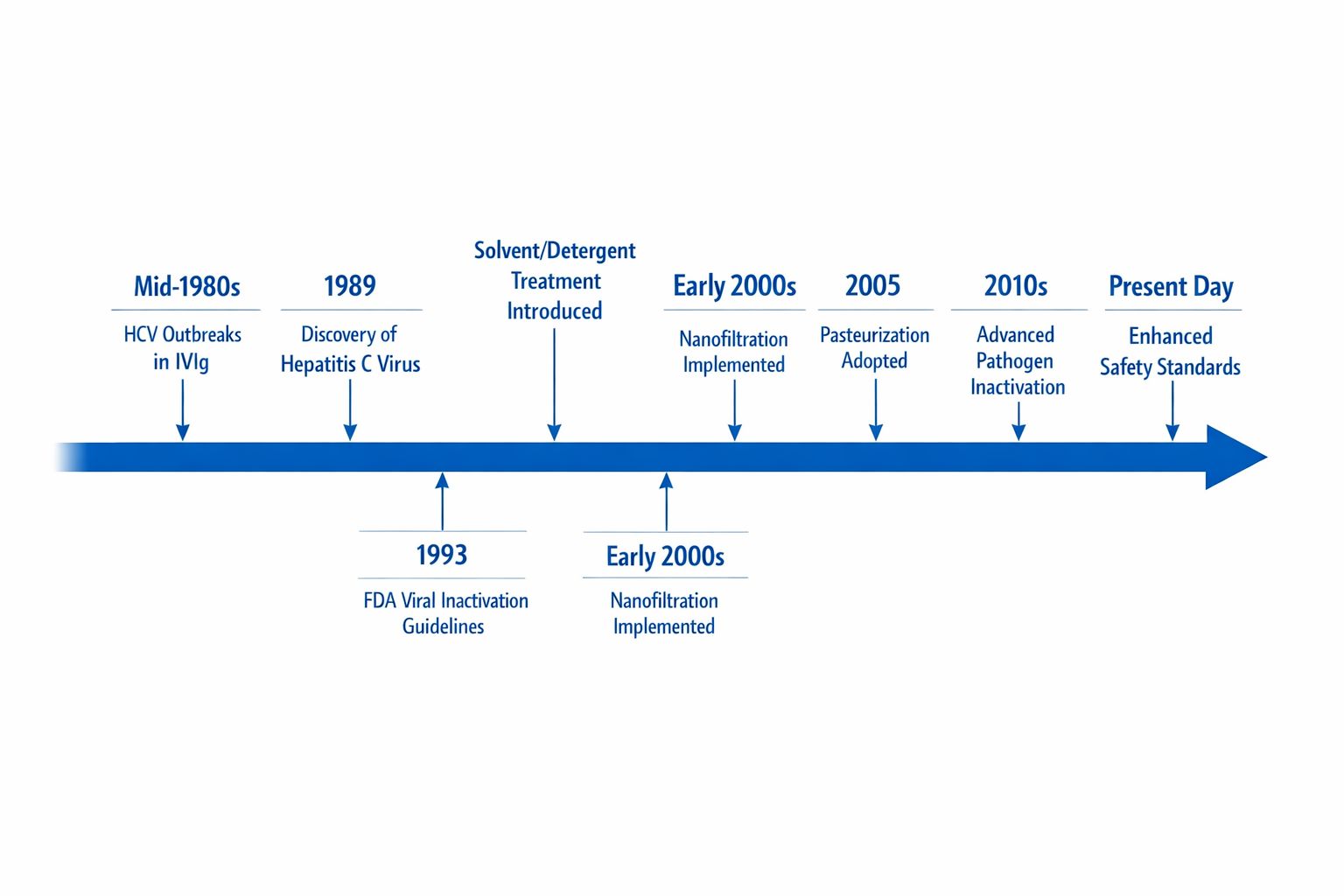
Fig 1. Timeline of critical safety milestones in IVIg manufacturing from 1980s to present
3. Technological Breakthroughs: Establishing Three-Tier Defense
3.1 Solvent/Detergent (S/D) Treatment
Introduced in the early 1990s, solvent/detergent (S/D) treatment revolutionized lipid-enveloped virus inactivation through:
- Solvent (tri-n-butyl phosphate/TNBP): Disrupts viral envelope lipid structures
- Detergent (Triton X-100 or Polysorbate 80): Enhances viral lysis efficiency
Under controlled conditions (typically 24-48 hours), S/D treatment achieves ≥4 log reduction value (LRV) against HIV, HBV, and HCV. This technology remains the cornerstone of viral inactivation steps in contemporary IVIg manufacturing.
3.2 Pasteurization
Complementing S/D treatment, pasteurization (60°C, 10 hours) provides a critical second defense layer. In the presence of stabilizers (glycine, sucrose), IgG maintains structural integrity while viral nucleic acids and proteins undergo irreversible denaturation. This method is particularly effective against non-enveloped viruses such as parvovirus B19.
3.3 Nanofiltration
The 21st-century adoption of 20-nanometer filtration technology introduced physical size-exclusion clearance, removing residual viral particles, prion protein aggregates (PrP^Sc, ~10-30nm), and high-molecular-weight IgG polymers.
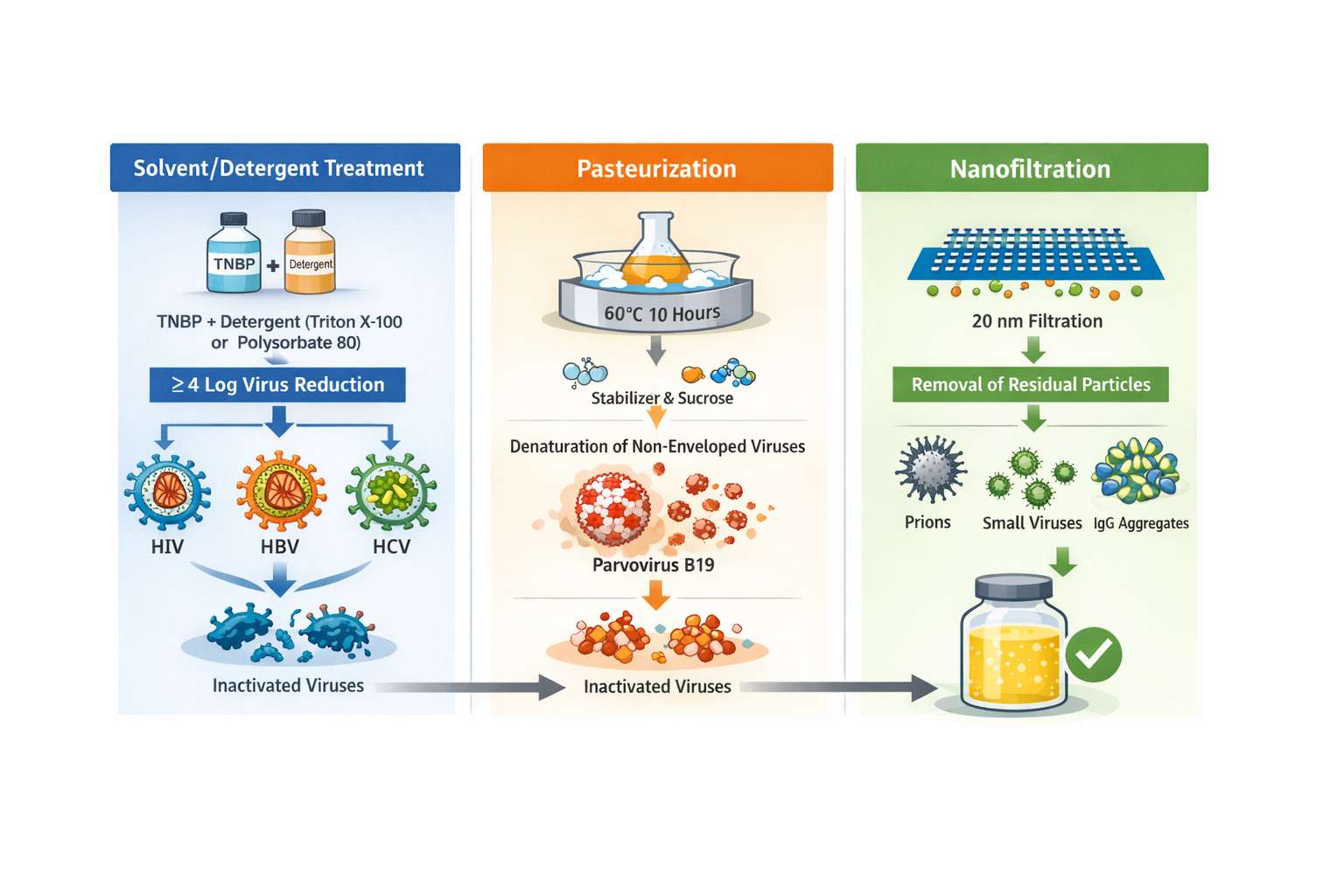
Fig 2. Schematic overview of modern three-tier viral safety strategy in IVIg production
4. Fourth-Generation IVIg: Current Purity Standards
4.1 Defining "Fourth-Generation" Purity
Modern fourth-generation IVIg represents the pinnacle of process integration, characterized by:
- >99% monomeric IgG purity with polymer content <1%
- Intact Fc functionality and glycosylation patterns
- IgA residue <5 μg/mL
- Comprehensive prion safety in plasma products
4.2 Implications for Research Reproducibility
This purity level critically impacts research reproducibility. In vivo experimental consistency has improved dramatically across generations:
| IVIg Generation | Monomer Purity | Polymer Content | In Vivo Reproducibility |
|---|---|---|---|
| 2nd Gen (1990s) | 85-90% | 8-15% | 60-70% |
| 3rd Gen (2000s) | 95-98% | 2-5% | 75-85% |
| 4th Gen (2015+) | >99% | <1% | >90% |
Modern fourth-generation IVIg achieves unprecedented batch consistency through low-pH incubation, multi-modal chromatography, and terminal nanofiltration, reducing experimental coefficient of variation (CV) from 15-20% to <5% in standardized ADCC assays.
5. Evolution of Prion Safety in Plasma Products
Post-BSE crisis, prion safety in plasma products became paramount. Fourth-generation IVIg implements quadruple redundancy:
- Donor deferral: Geographic risk-based exclusion
- Affinity depletion: PrP^Sc-binding protein removal
- 20nm nanofiltration: Physical prion aggregate interception
- Adsorptive clearance: Specific ligand-mediated removal
This multi-pronged approach reduces theoretical prion transmission risk to <1 in 10 million doses, effectively eliminating clinical concern.
6. Conclusion: From Reactive Safety to Proactive Design
The journey from 1980s HCV tragedies to fourth-generation IVIg epitomizes a paradigm shift from reactive crisis management to proactive quality-by-design. Contemporary IVIg safety profile now encompasses viral, prion, and immunogenicity dimensions, while >99% purity standards provide researchers with reliable molecular tools.
As continuous manufacturing and real-time release testing mature, fifth-generation IVIg promises "zero-risk" vision through integrated process analytical technology (PAT) and single-use systems. The convergence of safety and purity defines not just a product, but a commitment to scientific precision.
For precision medicine research, choosing IVIg products that meet study requirements is both a technical decision and an embodiment of scientific rigor. We urge suppliers to disclose detailed manufacturing and quality data to advance immunology research standardization.
References
2. FDA. (1993). Guidance for Industry: Viral Inactivation Guidelines. Rockville, MD.
3. Buchacher, A., & Schwinn, H. (2006). Vox Sang, 90(1): 73-82.
4. European Pharmacopoeia 10.0, Intravenous Immunoglobulin monograph.
5. Gregersen, J.P. (2020). Transfus Med Rev, 34(2): 115-123.